

The Complete Guide to Vacation Rental Cleaning Management
Key Takeaways: Cleanliness is the #1 guest priority — an analysis of 460,000+ Airbnb reviews confirms it drives more bookings than location or amenities. Listings below 4.7 cleanliness stars lose up to 30% of potential revenue. Hosts with 10+ properties spend 5-8 hours/week on cleaning logistics; automation reduces that to under 1 hour. The cleaning industry sees 75-200% annual turnover — your retention strategy matters as much as your hiring strategy. Every negative cleanliness review costs roughly $1,500 in lost bookings on a $30K/year listing.
Vacation rental cleaning management is the system of hiring, scheduling, quality-checking, and retaining cleaners across your short-term rental (STR) portfolio. A turnover — the process of resetting a property between guests — is the single highest-impact operational area for guest reviews and booking revenue. An analysis of over 460,000 Airbnb reviews (2025) confirmed that cleanliness outranks location, amenities, and communication as the top factor guests evaluate.
The systems in this guide apply at every scale — but the mistakes are most expensive at 5-10 properties, before automation kicks in. This is the full management lifecycle: hiring and retaining cleaners, choosing between manual and automated scheduling, building scalable quality standards with turnover checklists, evaluating 2026 cleaning tools, and avoiding the most expensive mistakes. Every section includes specific data, cost benchmarks, and actionable systems you can implement this week.
| Portfolio Size | Without Automation | With Automation (e.g. TidyStay) | Cleaners Needed | Biggest Risk |
|---|---|---|---|---|
| 1 property | 30-60 min/week via texts | Auto-scheduled from bookings | 1 cleaner + 1 backup | No backup if cleaner cancels |
| 5 properties | 3-5 hrs/week | <30 min/week | 2-3 cleaners | Scheduling conflicts on same-day turnovers |
| 10 properties | 5-8 hrs/week | <1 hr/week | 4-6 cleaners | Coordinator burnout and inconsistent quality |
| 20+ properties | 8-12 hrs/week (unsustainable) | <1 hr/week + auto-backup assignment | 8-12+ cleaners via marketplace | Cleaner turnover and system fragility |
How coordination time, tools, and team size scale with property count. Based on industry benchmarks and Hostfully data.
Why Cleaning Management Directly Impacts Your Revenue and Reviews
Airbnb's search algorithm weighs cleanliness ratings heavily when ranking listings. Properties with 4.8+ cleanliness scores generate up to 20% more bookings than those rated lower, according to AirDNA's 2025 analysis. The algorithm interprets consistent high cleanliness scores as a signal of reliability, pushing those listings higher in search results and into more "Guest Favorites" placements.
The revenue math is straightforward. Listings that drop below 4.7 cleanliness stars lose up to 30% of potential revenue — not just from fewer bookings, but from lower nightly rates needed to compete. Each 5-star review drives 3.2% growth in Gross Booking Value and a 4.6% increase in future bookings (AirDNA). Conversely, a single negative cleanliness review can cut bookings by approximately 5%.
Put that in dollar terms: on a listing earning $30,000 per year, a single bad cleanliness review translates to roughly $1,500 in lost bookings. Two bad reviews in the same quarter can trigger an algorithmic penalty that takes months to recover from. For hosts running 10+ properties, the aggregate revenue exposure from poor cleaning management easily reaches $15,000-$30,000 annually.
Cleaning management is not a cost center — it is a revenue protection system. Operators running automated coordination on 10+ properties typically hit 50-60% gross margins and 35-45% net. Those managing the same scale manually average 35-45% gross and 20-30% net — the gap traces directly to missed turnovers, emergency cleaner costs, and the cascading review damage that follows.
89% of U.S. STR listings charge cleaning fees (AirDNA, 2025), which means guests already expect a professionally cleaned space. They are paying for it explicitly. When reality falls short of that expectation, the review reflects not just disappointment but a sense of being overcharged — a combination that produces the harshest ratings.
Revenue at risk: If you manage 10 properties averaging $30K/year each, just two bad cleanliness reviews across your portfolio could cost $3,000+ in lost bookings. At 20 properties, that exposure doubles. Cleaning management is revenue management.
How to Find, Hire, and Retain Reliable Vacation Rental Cleaners
Finding reliable cleaners is the most common bottleneck for STR hosts at every scale. The cleaning industry experiences 75-200% annual turnover, with some reports citing rates as high as 375%. That means if you hire four cleaners in January, statistically one to three of them will leave by December. Every replacement costs $1,000+ in recruitment, training, and onboarding — not counting the quality dips during the transition.
The strongest hiring channels for vacation rental cleaners in 2026 include local Facebook groups, Nextdoor, cleaner-specific job boards, and marketplace platforms like TidyStay's cleaner marketplace that connect hosts directly with vetted STR cleaning professionals. Many experienced cleaners prefer these specialized platforms over general job boards because STR cleaning offers flexible scheduling, premium pay rates, and the autonomy to start their own vacation rental cleaning business.
The 5-Step Hiring Process for STR Cleaners
- Define your cleaning scope and pay rate
Document property-specific requirements, expected turnover duration, and compensation. For 2026, average STR cleaning rates are $20-$90/hour (average $30/hour), or per-turnover flat rates: 1BR $40-$90, 2BR $50-$130, 3BR $70-$150, 4+BR $100-$250+.
- Source candidates from 2-3 channels simultaneously
Post on local Facebook groups, STR cleaner marketplaces, and Nextdoor. Specialized channels produce candidates who already understand turnover workflows, reducing training time by 50% or more.
- Run a paid trial clean
Invite top candidates to complete one paid turnover at your property. Evaluate speed, attention to detail, communication responsiveness, and whether they follow your checklist. Pay the full rate — this is an investment, not a test.
- Assign primary and backup roles
Every property needs a primary cleaner and at least one backup. Solo hosts with 1-3 properties can share a backup across all listings. At 10+ properties, each property should have a designated backup who has cleaned that specific unit before.
- Set up a retention system from day one
Communicate consistently, pay on time (within 24-48 hours of completed cleans), offer first-choice scheduling to top performers, and provide quarterly rate reviews. Cleaners who feel valued and fairly compensated stay longer.
Compensation is the most important retention lever. Hosts who set the right price for STR cleaning based on local market data, property size, and turnover complexity retain cleaners 2-3x longer than hosts who anchor to the lowest rate they can negotiate. Underpaying cleaners is the single fastest way to guarantee turnover — and the hidden costs of replacing them far exceed the savings.
The independent cleaner vs. cleaning company decision depends on your scale. Solo hosts with 1-5 properties typically get better value, flexibility, and relationship quality from independent cleaners. At 10+ properties, a cleaning company can provide built-in backup coverage and scheduling flexibility — but at a 20-40% premium. Many operators use a hybrid approach: independent primary cleaners supplemented by a cleaning company for overflow and emergencies.
The biggest mistake hosts make is treating cleaning as a commodity. Your cleaner is the last person to touch the guest experience before check-in. Invest in that relationship like it's worth $1,500 per review — because it is.
— TidyStay Editorial Team

Manual Scheduling vs Automated Coordination: Which Approach Fits Your Portfolio?
Manual vs. Automated Cleaning Coordination
| Feature | ||
|---|---|---|
| Weekly time at 10 properties | — | — |
| Last-minute cancellation handling | — | — |
| Calendar sync accuracy | — | — |
| Photo verification | — | — |
| Cost per month (10 properties) | — | — |
| Scales beyond 15 properties | — | — |
| Best for | — | — |
The problem has a name: text-message chaos. It is the state where you are managing cleaning schedules through a sprawl of text threads, screenshots of calendar apps, and spreadsheets that require manual updates after every booking change. According to Hostfully's operator survey, hosts with 10+ properties spend 5-8 hours per week on cleaning logistics alone — most of it on communication that could be automated.
At 1-3 properties, manual coordination works. You know your cleaner personally, turnovers are infrequent enough to manage via text, and a shared Google Calendar handles the scheduling. The system breaks at 5 properties — not because the individual tasks are harder, but because the volume of coordination decisions per week exceeds what a text-based system can reliably handle without errors.
Automation changes the math entirely. When you automate your Airbnb cleaning schedule, new bookings automatically trigger cleaning assignments, send instructions to the assigned cleaner, and confirm completion — all without a single text message from you. TidyStay connects directly to your booking calendar and pushes assignments to cleaners automatically. Hosts who make this switch consistently report reducing coordination time from 5-8 hours to under 1 hour per week, regardless of portfolio size.
The technical foundation is calendar synchronization. Most property management systems (PMS) — software that centralizes booking management across platforms like Airbnb, Vrbo, and Booking.com — export booking data via iCal feeds. When you sync your iCal calendar with your cleaning workflow, every checkout automatically becomes a cleaning assignment. No manual entry. No missed turnovers.
Coordinator burnout is the predictable outcome of scaling a manual system past its capacity. It manifests as missed turnovers, dropped messages, scheduling conflicts, and — most dangerously — a slow erosion of quality standards because the host is too overwhelmed to follow up on every clean. The operational target for efficient scaling is below 5 hours per month of operational time per property. Manual systems cannot achieve that above 5 units.
The switch point: If you spend more than 1 hour per week per property on cleaning coordination, you have outgrown your current system. At 5+ properties, the cost of cleaning management software ($30-$100/month) pays for itself in the first week through time savings alone.
Building Cleaning Checklists and Quality Standards That Scale
Consistent quality across multiple cleaners and properties requires a documented standard — not verbal instructions. A strong checklist serves as both a training tool and a quality assurance system. Start with a detailed turnover checklist that covers every room and task, then customize it per property for unique features like hot tubs, fireplaces, or smart home devices.
The best checklists operate on two layers: a universal base standard that applies to every property (sanitize bathrooms, change all linens, vacuum all floors, restock essentials) and a property-specific addendum that covers unique items. This two-layer approach lets you onboard a new cleaner to any property quickly — they learn the universal standard once, then review the short property-specific additions.
Photo verification closes the accountability gap that checklists alone cannot. Requiring cleaners to submit photos of key areas — kitchen counters, bathroom, beds made, entrance — before marking a turnover complete adds less than 5 minutes to the cleaning process but eliminates the most common quality failures. At scale, photo verification becomes the primary quality assurance mechanism because physical inspections are not feasible for every turnover.
Deep Cleaning Schedules: Beyond the Turnover
Turnover cleans maintain day-to-day standards, but deep cleans prevent the slow accumulation of grime that guests notice in reviews even when the surface looks clean. Industry best practice recommends deep cleaning every 3-6 months, or monthly for high-occupancy properties running 20+ turnovers per month. Deep cleans should include carpet shampooing, grout cleaning, appliance deep-cleaning, window washing, and mattress sanitization.
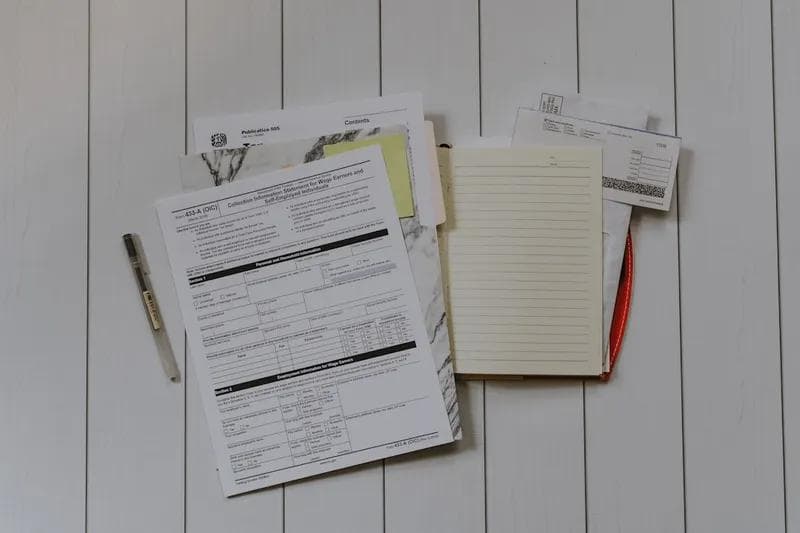
Same-day turnovers — when a guest checks out and a new guest checks in on the same day — are the highest-stakes cleaning events. The typical window is 4-6 hours, and there is zero margin for delays. Properties that handle same-day turnovers successfully have three things in common: a tightly timed checklist, a pre-staged supply kit at the property, and a confirmed backup cleaner who can step in if the primary is running behind.
A room-by-room checklist template with photo verification prompts, deep clean scheduling, and supply restock tracking. Customizable for any property size.
Cleaning Management Tools and Technology: What to Look For in 2026
The 2026 cleaning management tool landscape falls into four categories: standalone scheduling apps, PMS-integrated cleaning modules, cleaner marketplace platforms, and all-in-one operations platforms. Each serves a different portfolio size and operational complexity. The right choice depends on how many properties you manage, whether you use a PMS, and how much of the coordination you want to automate.
| Tool Category | Best For | Price Range | Key Feature | Limitation |
|---|---|---|---|---|
| Standalone scheduling apps | 1-5 properties | $0-$30/mo | Simple calendar + cleaner notifications | No PMS sync, manual booking entry |
| PMS-integrated cleaning modules | 5-15 properties | Included in PMS ($50-$200/mo) | Auto-trigger cleans from bookings | Limited cleaner-side features |
| Cleaner marketplace platforms | Any size, especially 5-20 | $0-$50/mo | Access to vetted cleaners + scheduling | Cleaner availability varies by market |
| All-in-one operations platforms | 15+ properties | $100-$300/mo | Cleaning + maintenance + inspections | Complex setup, higher cost |
Evaluation criteria and best-fit scenarios for each tool category.
When evaluating any cleaning management tool, prioritize five capabilities: automatic cleaning triggers from booking events, real-time calendar sync via iCal or API, cleaner-side mobile app with checklist and photo upload, backup cleaner auto-assignment, and reporting that tracks cleaning costs per property. Tools that lack any of these five features will create manual workarounds that defeat the purpose of automation.
TidyStay connects your booking calendar to your cleaning team automatically. New bookings trigger assignments, cleaners get mobile notifications with property-specific checklists, and photo verification confirms completion — all without a single text message from you.
TidyStay's coordination features →The marketplace model is the most significant shift in STR cleaning management in 2026. Instead of hiring cleaners directly and managing the entire employment relationship, marketplace platforms maintain a network of vetted, reviewed cleaners that hosts can book on demand or schedule for recurring turnovers. This model solves the two biggest pain points simultaneously: finding reliable cleaners and having backup coverage when someone cancels.
Integration depth matters more than feature count. A tool that syncs seamlessly with your existing PMS, communicates with cleaners through their preferred channel, and requires minimal daily input from you will outperform a feature-rich platform that demands constant attention. Check see TidyStay pricing to compare how a marketplace-first approach stacks up against traditional tools for your portfolio size.
How Cleaning Management Changes From 1 Property to 20+
The operational demands of vacation rental cleaning management do not scale linearly — they compound. At 1 property, you are the cleaner, the inspector, and the scheduler. At 5 properties, you become a coordinator. At 10, you need systems. At 20+, you need a team and technology working together or the entire operation becomes fragile.
Stage 1: Solo Operator (1-3 Properties)
At this stage, many hosts clean their own properties or rely on a single trusted cleaner. Text messages and a shared calendar are sufficient. The biggest risk is not having a backup cleaner — one cancellation before a check-in can cascade into a bad review, an emergency scramble, or a cancelled booking. The action item at this stage is simple: find and test a backup cleaner before you need one.
Stage 2: Growth Phase (5-10 Properties)
This is where text-message chaos peaks. You are managing 3-6 cleaners, handling 30-80 turnovers per month, and spending 3-8 hours per week just on scheduling and communication. Same-day turnovers across multiple properties become a regular stress point. This is the stage to implement cleaning management software and standardized checklists. Hosts who manage cleaners across multiple properties successfully at this scale all share one trait: they systematize before the system breaks.
Stage 3: Scaling Operation (10-20+ Properties)
At this scale, the operational target is below 5 hours per month of cleaning-related operational time per property. Achieving that requires full automation of scheduling, automated backup assignment, digital checklists with photo verification, and a cleaning team large enough to absorb cancellations without disruption. Many operators at this level hire a cleaning operations manager or use a marketplace platform to offload coordinator responsibilities entirely.
The math of cleaning team sizing at scale: for 10 properties averaging 8 turnovers per month each (80 turnovers total), you need 4-6 active cleaners with 2-3 backups. Each full-time STR cleaner can handle approximately 15-20 turnovers per month depending on property size and travel time between locations. Understaffing by even one cleaner creates cascading scheduling pressure that degrades quality.
Scaling benchmark: Operators who maintain below 5 hours/month operational time per property consistently achieve 50-60% gross margins and 35-45% net. Those above 10 hours/month per property see gross margins compressed to 35-40% because coordination inefficiency shows up in missed turnovers, quality inconsistency, and cleaner churn.
The 5 Most Expensive Vacation Rental Cleaning Mistakes
Cleaning mistakes are not just operational annoyances — they carry direct revenue consequences. These five mistakes represent the highest-cost failures in vacation rental cleaning management, each one preventable with the right systems.
Mistake 1: No Backup Cleaner Plan
When your only cleaner cancels two hours before a check-in, you have two options: clean it yourself or contact the guest. Neither is scalable. Emergency cleaning services charge 2-3x standard rates, and last-minute cancellations by the host can trigger platform penalties. The fix: every property has a primary and a backup cleaner, and the backup has physically cleaned that specific property at least once.
Mistake 2: Paying Below Market Rate
Saving $15 per turnover by underpaying your cleaner sounds like smart budgeting until that cleaner leaves for a better-paying host. Replacement cost: $1,000+ in recruitment, training, and the quality dips during the transition period. With cleaning industry turnover rates at 75-200% annually, retention is cheaper than recruitment. Pay at or slightly above market rate and you will spend less per year in total cleaning costs.
Mistake 3: No Quality Verification System
Trusting that every clean meets your standards without verification is a gamble that fails at scale. One cleaner having a bad day — rushing between back-to-back turnovers, skipping the bathroom deep-clean, forgetting to restock coffee — can produce a 3-star cleanliness review. Photo verification, digital checklists, and periodic spot inspections are the three quality control layers that protect your ratings.
Mistake 4: Skipping Deep Cleans to Save Money
Turnover cleans address surface-level cleanliness. Without scheduled deep cleans every 3-6 months (or monthly for high-occupancy properties), grime accumulates in grout, behind appliances, inside ovens, and in carpet fibers. Guests sense this even when they cannot identify the specific issue — reviews mention "dingy," "worn," or "not as clean as expected" even when the turnover clean was thorough. Deep cleans cost $200-$500 per property but protect thousands in review-driven revenue.
Mistake 5: Scaling Without Systems
Adding properties without upgrading your cleaning management infrastructure is the most expensive mistake on this list because it compounds every other problem. Each new property added to a manual coordination system increases the probability of a scheduling error, a missed turnover, or a quality lapse. The rule of thumb: upgrade your systems before you need to, not after the first failure. If you are at 5 properties using text messages, implement software before adding property number 6.
For a detailed breakdown of guest-facing quality failures, read about the cleaning mistakes that kill your reviews.
The cost of poor cleaning management is invisible until it shows up in your reviews. By then, the revenue damage is already done — and recovery takes months, not days.
— TidyStay Editorial Team
Frequently Asked Questions About Vacation Rental Cleaning Management
Stop Managing Cleaning by Text Message
TidyStay connects your booking calendar to vetted cleaners automatically. Turnovers get scheduled, assigned, and verified — without a single text from you. Join hosts managing 1 to 50+ properties on the platform built for STR cleaning coordination.
Start Free